
What Drywall Spot Repair Is
Drywall spot repair is the fix of a small, localized area of damaged wall or ceiling board without replacing the whole panel. A pro fills, patches, tapes, sands, texture matches and repaints only the damaged spot, then blends it into the surrounding surface so the repair disappears. It works when the board around the damage is dry and solid.
If you own a home, rent one, manage rentals or maintain a commercial space, this is the repair you’ll meet most often.
How Drywall Spot Repair Works
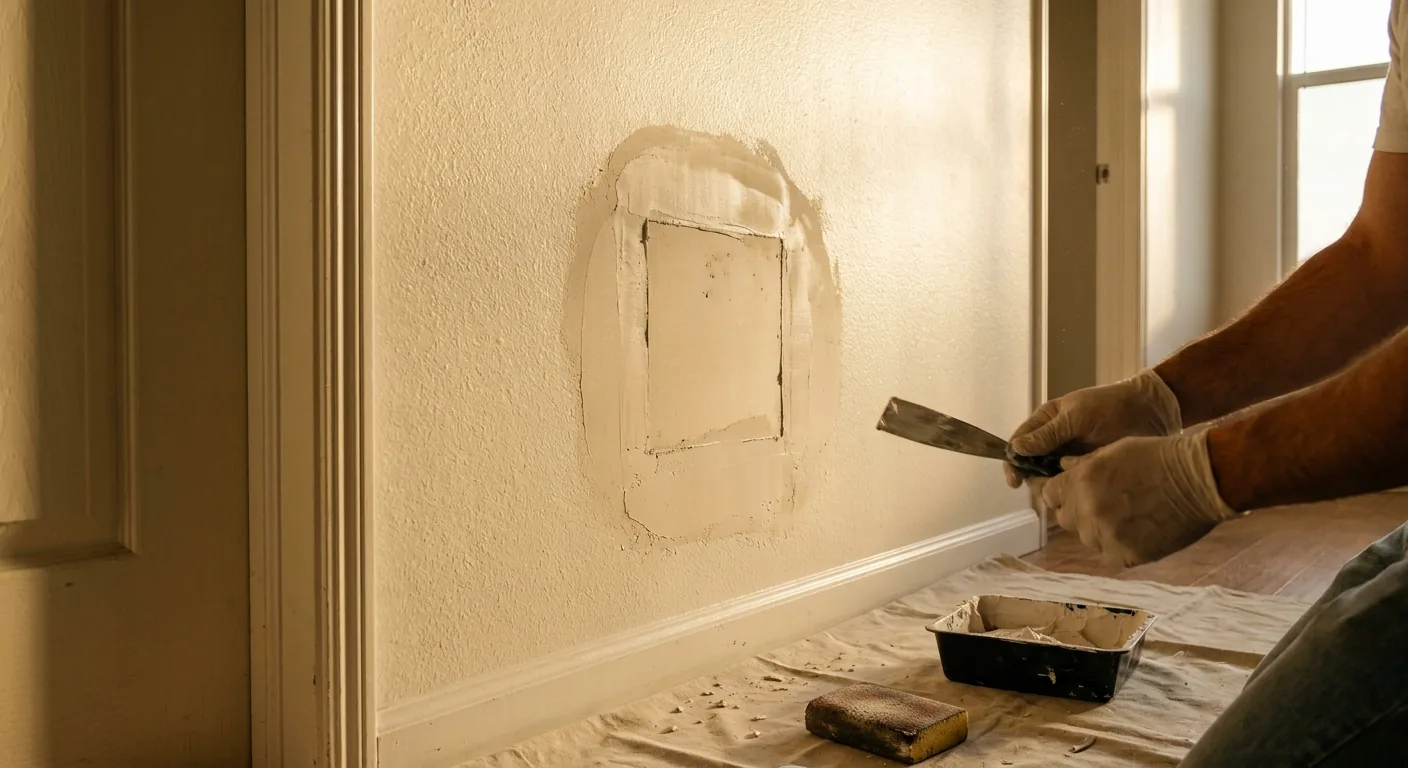
Two mechanisms live under one name. Tiny defects get a fill-and-finish treatment. Actual holes get the longer sequence: cut, patch, tape, mud, sand, texture, paint.
Here’s the vocabulary a contractor will use with you. Mud is joint compound. Feathering means thinning the compound out toward the edges so no ridge remains. Flashing is the shiny or dull rectangle that shows up after paint when the patch wasn’t primed. A California patch is a drywall plug with the paper edges left on, folded back to act as its own tape. Nail pop is a fastener pushing the compound off the wall as framing dries and moves.
The order matters more than the products. Before you open a wall, check what sits behind the cut: shine a flashlight into the opening and look for electrical cords or plumbing, especially within a foot of outlets, switches and fixtures. Cut back to solid, dry board, then scrape away frayed paper and loose tape strands so nothing telegraphs under the mud. Fit a patch. Tape the seams with mesh or paper. Lay two or three thin coats of compound, sanding between each.
Choose the compound by coat, not by habit. Quick-set mud (also called hot mud) for the fill coats when you want to stack two or three coats in one afternoon, and lightweight premix for the final sandable coat. Feather the last coat wide, roughly 2 to 3 inches past the patch on the first pass and 8 to 12 inches on the skim for anything over a few inches across. Match the texture. Prime. Paint.
Example Box: a 3-inch doorknob hole, start to finish
The hole sits in an orange peel wall in a hallway. First, score and cut it to a clean square. A self-adhesive mesh patch covers the opening, then a coat of setting-type compound goes on and dries hard in about 45 minutes. Two thin finish coats follow, each feathered a few inches wider than the last, with a light sanding between. Orange peel gets sprayed on in a test pass first, checked against the wall, then applied. Primer seals the compound and the torn paper edges. Paint goes on last. Total active work is around an hour, spread over a half day of dry time.
That single example explains why a pro can often do patch, texture and paint touch-ups in one visit while a weekend DIY attempt stretches across two or three days.
Tiny Holes, Dents, and Nail Pops
These skip the patch step entirely. Clean the area and scrape away loose paper or crumbling edges. Press lightweight spackle in with a putty knife, level it with the wall, let it dry 15 to 30 minutes, sand it flush, then prime and paint.
For a nail pop, set the old nail below the surface, drive two screws into the stud about 1.5 inches above and below the pop to pull the board tight, then fill every dimple flush. Skipping the screws is why the same pop keeps coming back.
Patches for Openings That Need More Than Filler
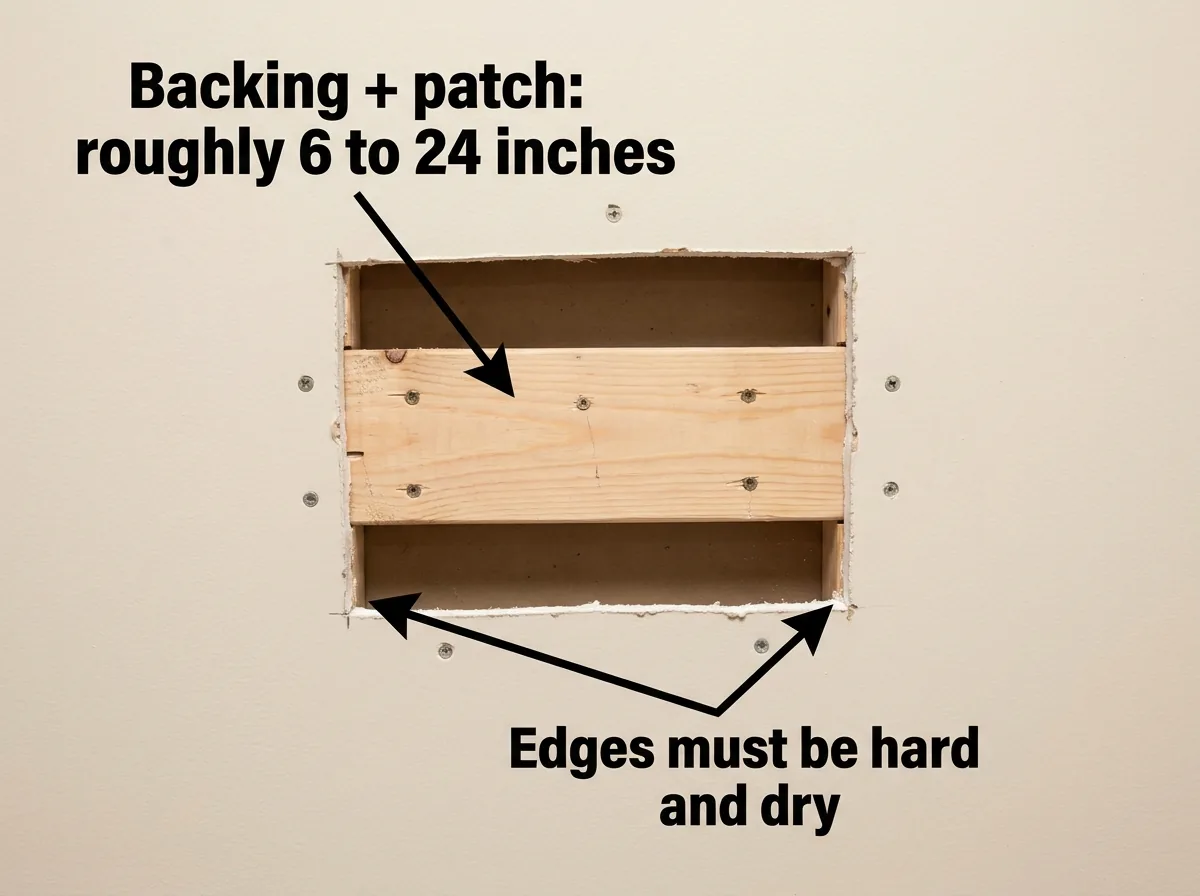
Once the opening is bigger than a pencil, filler alone sags and cracks. Under about 6 inches, a self-adhesive mesh patch or a California patch bridges the gap. Between roughly 6 and 24 inches, you need real backing: a 1×3 wood cleat or furring strip screwed behind two sides of the opening with screws every 6 to 8 inches, or a cut-in drywall plug fastened to framing. Openings over 24 inches usually call for stud-to-stud replacement, which is a different job.
One rule holds across all sizes. The edges of the opening must land on board that’s hard and dry. If the drywall crumbles under a fingernail or feels spongy, a patch just hides the problem.
When Drywall Spot Repair Matters
Spot repair is the right call when the damage is localized and the board around it is still sound. It stops being the right call when moisture, movement or scale are in play. Here’s what changes case by case.
- Small holes from doorknobs, TV mounts and anchors. Straightforward patch territory. What changes is the wall’s texture. A smooth wall hides a patch easily. Knockdown or orange peel needs a spray test before anything touches the wall.
- Dents and scuffs. Usually a fill-and-sand job. The risk here is sheen. Satin and semi-gloss paints show every flat spot, so the repaired area often needs paint carried to the nearest corner or edge.
- Nail pops and hairline cracks along seams. Fine for spot repair when isolated. If a crack keeps reopening in the same place each season, it’s structural movement, not a finish problem, and re-mudding will only buy you a few months.
- Torn paper from removed tape, wallpaper or fixtures. Very common, and the one people get wrong. Exposed brown paper soaks up water from the compound and bubbles. Scrape the loose fibers off first, then seal the area with a shellac or oil-based primer before mudding so the patch won’t bubble or flash later.
- Plumber and electrician access cuts. Clean-edged, framed on at least two sides, and ideal for a cut-in patch. What changes is timing. Patch after the trade signs off, never before.
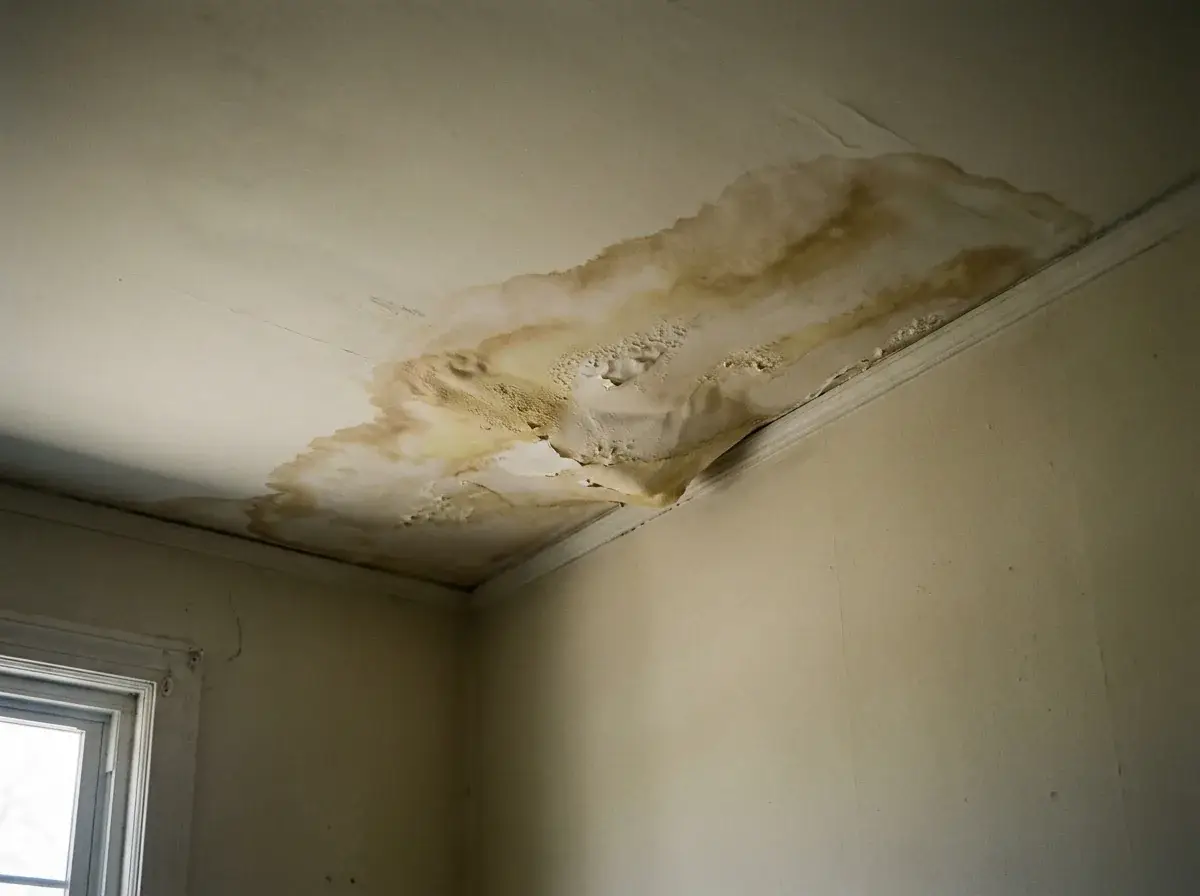
- Water-stained or sagging ceilings. Not spot repair until the source is fixed and the board is fully dry. Soft, swollen or crumbling board gets cut out, not patched.
One more situation deserves a flag. In apartments, offices and tenant spaces, spot repair also keeps the disruption small. A few patches after a fixture move beat shutting a suite down for a rebuild. Some of those assemblies are fire-rated, and patching them to keep the rating means matching the board type and the fastener pattern, not just filling the hole.
When you would rather hand the judgment call to someone who does this daily, send a couple of photos for a fast assessment and skip the guesswork.
Common Confusions With Drywall Spot Repair
People mix spot repair up with two neighbors: full drywall replacement on one side and a quick spackle-only touch-up on the other. The difference comes down to the size of the damage, the condition of the board and what the surface looks like when the paint dries.
| Spackle-only touch-up | Drywall spot repair | Panel replacement | |
|---|---|---|---|
| Typical damage | Nail holes, shallow dents, scratches | Holes up to about 24 inches, cracks, nail pops, torn paper, access cuts | Damage across more than roughly 30% of a wall, soft or swollen board, repeated failures |
| Board condition | Fully intact | Solid and dry around the damage | Compromised, wet, moldy or brittle |
| What gets added | Filler only | Patch, tape, backing, mud, texture | New board, screws, full taping |
| Dry time | 15 to 30 minutes | Several hours to a day depending on compound | Multiple days |
| Finish outcome | Invisible on flat paint, can flash on sheen | Invisible when texture matched and primed | Invisible, but a bigger paint job follows |
| Who usually does it | Homeowner | Homeowner for small ones, specialist for visible walls and textures | Drywall contractor |
| Patch kit fit | Bare spackle only, and it crumbles on anything past a small nail hole | Mesh plate up to about 6 inches, then mud, feathering, texture and primer; some kits include primer in the compound | No kit, new board and full taping |
Two other mix-ups worth naming. A texture-only repair fixes a surface that lost its finish but still has solid board behind it, so no patch is needed. And patch kits sold at big box stores are real spot repair products, just limited: the mesh plates in them top out around 6 inches, and every one of them still requires mudding, feathering, texture and primer to look right. The patch is the easy 20 percent of the job.
What to Do Next After You Understand Spot Repair
Your next decision is simple: do it yourself, or hand it off.
According to HomeAdvisor, a professional drywall repair project typically runs $296 to $929 nationally, and the per-hole and per-visit math belongs in “Hole in Drywall Repair Guide: Costs, DIY or Pro.”.
Hand it off when the wall is textured, when the paint has sheen, when the spot sits under a window or in raking light, or when a move-out deadline is closing in. Those are the conditions where a visible patch costs more to fix than to do right the first time.
Send 2 to 3 pictures and your zip code for a quote within 10 minutes.
Frequently Asked Questions
What is the best product to patch small holes in drywall?
For holes under about half an inch, lightweight spackle is the fastest choice and sands in 15 to 30 minutes. For anything from half an inch to 6 inches, a self-adhesive mesh patch plus setting-type compound holds better and resists the shrinkage cracks that plain spackle develops in a deeper fill. Many pros fill with all-purpose compound, then finish with lightweight for easier sanding.
What does drywall repair mean?
It means restoring a damaged section of gypsum board back to a flat, matching surface, whether that involves filling a dent, patching a hole, re-taping a failed seam or replacing a section of board. The finish work is the part that defines quality: taping, three thin coats of compound, feathering, texture and primer. Without those, you have a filled hole, not a repair.
What is the best filler for holes in drywall?
Lightweight premix spackle for cosmetic dings, setting-type compound (often called hot mud) for anything deeper than a quarter inch or wider than an inch. Hot mud sets chemically in 20, 45 or 90 minutes depending on the bag, barely shrinks and can take a second coat the same afternoon. It’s harder to sand, which is why the final coat is usually lightweight premix.
Do drywall repair patches work?
Yes, within their limits. A mesh or metal-backed patch plate does its job on openings up to roughly 6 inches on a wall that’s solid around the edges. Past that size, or on a ceiling where gravity pulls at the compound, you need real backing behind the patch rather than a stick-on plate.
At what hole size does spot repair stop working and replacement become necessary?
Around 24 inches across is the practical ceiling for spot repair. Past that, the patch spans too much unsupported area and most pros cut back to the studs and install a new section. Replacement also becomes the answer earlier than that when damage covers more than roughly 30 percent of a wall or repeats in the same spot.
How long does a drywall spot repair usually take?
Active work on a single small hole is under an hour. Dry time between coats is what stretches the job, so the compound you pick sets the schedule more than the patch does. A pro working with quick-set mud and a texture sprayer can finish patch, texture and paint touch-ups in one visit.
Why does my patch look fine head-on but terrible near a window?
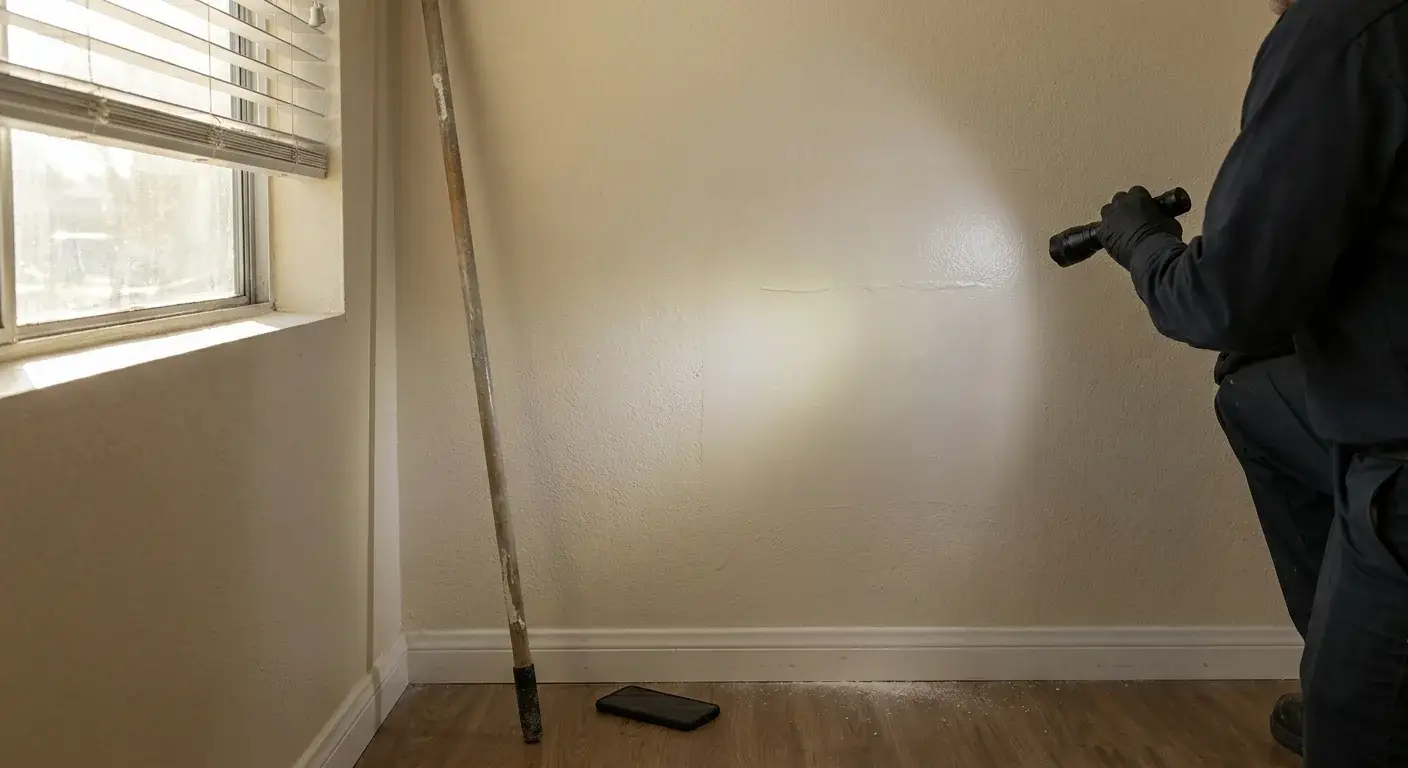
Raking light hits the wall at a low angle and exposes any height change the eye misses straight on. Check your work by holding a flashlight flat against the wall before you prime. The fix is a wider skim coat, so the taper is too gradual for the light to catch, and a flatter paint sheen helps too.
Can spot repair be done on a fire-rated wall in an apartment or office?
Yes, but the patch has to restore the assembly, not just the appearance. That means matching the original board type and thickness, typically Type X in rated walls, and using the same fastener spacing. Filling the hole with compound alone doesn’t maintain the rating.