
Drywall Repair Cost Explained: What Affects Price and How a Drywall Repair Company Quotes Your Job
Budgeting for drywall repair shouldn’t feel like a gamble. Drywall repair companies specialize in restoring your home’s smooth walls and ceilings, without ugly seams or mismatched textures. Understanding what affects price helps you compare estimates and choose quality service that protects your property value. This guide clarifies real costs, key factors, and how contractors build transparent, fair quotes.
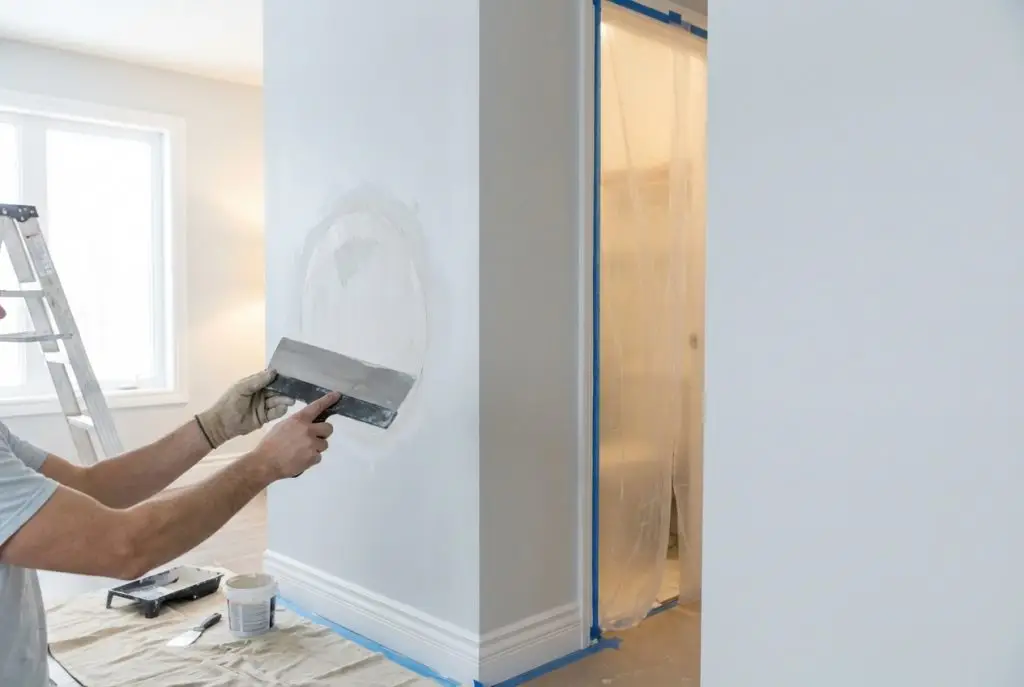
The short answer: drywall repair cost ranges at a glance
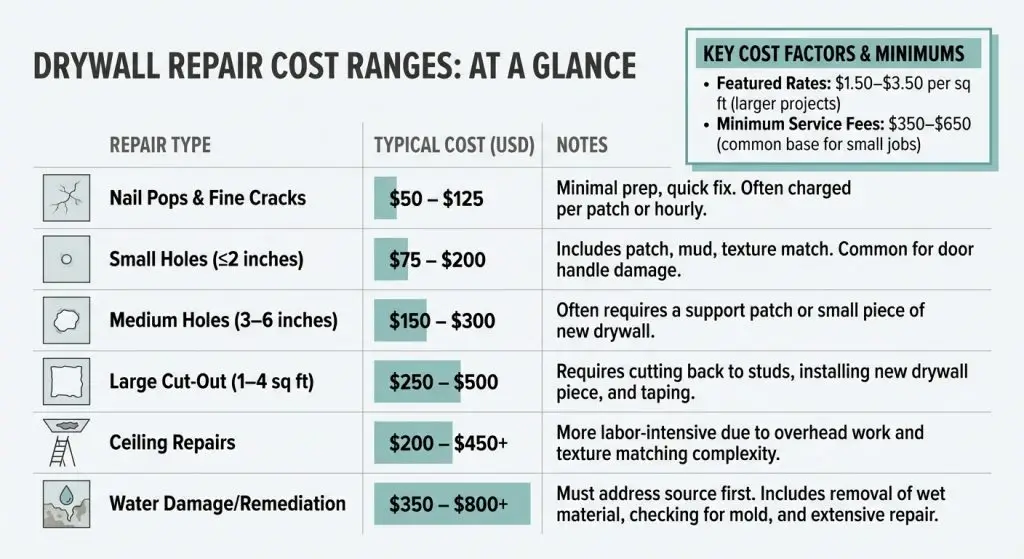
Most homeowners pay between $350 and $1,500 for professional drywall repair, depending on the size and complexity of the damage. Small holes or hairline cracks may cost just $100-$350 if bundled, while major water damage or ceiling repairs run higher. Location, finish matching, and prep all play a role. Here’s a quick rundown for common repairs:
| Repair Type | Typical Cost (USD) | Notes |
|---|---|---|
| Nail pops & Fine cracks | $100-$300 | Bundled, often under minimum |
| Small holes (≤2 inches) | $120-$450 per hole | Quick patch; usually <1 hour |
| Medium holes (3-6 inches) | $200-$650 per spot | May require backer board |
| Large cut-out (1-4 sq ft) | $350-$1,000+ | Multiple visits for finishing |
| Ceiling repairs (any) | $350-$1,500+ | Higher access, texture premium |
| Water damage/remediation | $500-$2,500+ | Includes containment/treatment |
Most repairs fall between $1.50 and $3.50 per square foot, but minimum service fees ($350-$650) often apply to small jobs.
What affects drywall repair cost
Several factors drive drywall repair pricing. Each one influences labor, materials, and the complexity of the job.
Top cost drivers checklist:
- Size and severity of the damage
- Wall vs. ceiling location
- Existing surface texture
- Paint blending and color match
- Moisture or mold remediation needs
- Site access and cleanup requirements
- Minimum service fee and trip/mobilization costs
Let’s break down how these affect your repair bill.
Size and complexity of the damage
The bigger the hole or crack, the more labor and materials are needed. Minor issues like nail pops may just require a dab of joint compound and a quick sand. But fixing larger holes means:
- Measuring the patch area (inches to several square feet)
- Cutting out damaged drywall and prepping new backer support (“backing”)
- Taping, three thin coats of mud, sanding, and finishing layers
- Multiple drying cycles and trips if a return visit is needed
Multi-patch jobs (several small holes) are more efficient per patch, but more edges or tricky repairs (around outlets, corners, or odd shapes) add time. For large jobs or areas with many defects, costs scale by square footage as labor time increases.
Location: walls vs ceilings and working height
Ceiling repairs almost always cost more than wall fixes. Why? Technicians need ladders or scaffolding, increasing setup and access time. Working overhead is physically demanding and requires extra care to control dust and debris. Expect:
- $350–$1,500+ for ceiling patches (vs. $100–$800 for similar wall repairs)
- Premiums for vaulted or high ceilings
- More time spent on protection and access, especially in stairwells or rooms with high fixtures
If the damaged area needs furniture moved or work in tight corners, labor costs go up to cover the extra effort.
Texture matching and surface class
Matching the texture is key for invisible repairs. Drywall pros are trained to replicate your existing wall finish, whether it’s smooth, orange peel, knockdown, or a heavy custom texture.
Texture affects price in several ways:
- Smooth finishes: Fastest and cheapest if walls are already flat
- Orange peel/knockdown: Needs more mud, careful blending, and sometimes custom sprayers
- Heavy textures or skip trowel: Most time-consuming; often priced at a premium
If the area doesn’t match after patching, a skim coat (thin plaster over a wide zone) might be suggested, raising the total cost. Surface prep and feathering affect both the look and the overall expense.
Paint scope and color matching
How much repainting is included in your quote? This matters for both appearance and cost. For small patches, a spot paint touch-up may work with a perfect color match. For larger repairs or certain paints (especially older, sun-faded colors), pros may recommend full-wall or even full-room repainting to avoid “flashing” (obvious patch outlines under new paint).
Other paint-related impacts:
- Longer drying times may require a second trip
- Specialty primers, stains, or matching tricky sheens add expense
- Color blending skills justify the pro premium
Check the estimate to see what’s included in your repair contract and what is up to you to finish.
Underlying issues: moisture, framing, or insulation
Repairing a hole is one task. Figuring out what caused it is another. Issues like:
- Ongoing leaks or high moisture
- Mold or water stains
- Broken framing, missing insulation, or old wires
…can all require extra steps that add cost. Look for line items like:
- Moisture & mold testing
- Moldicide treatment or HEPA containment
- Installing blocking or backers before new panels
A reputable drywall repair company will call out and list these extras instead of hiding them deep in the quote.
Access, containment, and cleanup
Professional drywall repair companies control dust, protect your home, and leave the site clean. These factors include:
- Masking floors and sealing off rooms
- Moving or protecting furniture
- HEPA dust control or negative air machines (for mold jobs)
- Debris removal and landfill fees
Labor for these protections is part of your estimate, especially on bigger or messier jobs. It also means less cleanup for you, a major value versus hiring a lower-cost handyperson.
How a drywall repair company quotes your job
A reputable drywall repair company removes guesswork by using systematic estimating methods. Understanding their workflow helps you spot a fair, detailed bid instead of a vague total. Here’s how the process works from first contact to final contract.
Remote triage and photo-based estimate
To provide a fast, accurate first quote, most companies will ask for:
- Clear, well-lit photos (close-up of damage and wider context)
- Dimensions of holes/cracks (use a tape measure for scale)
- Room/ceiling height and access obstacles (furniture, fixtures)
- Details on texture/paint and any known history (e.g., past leaks)
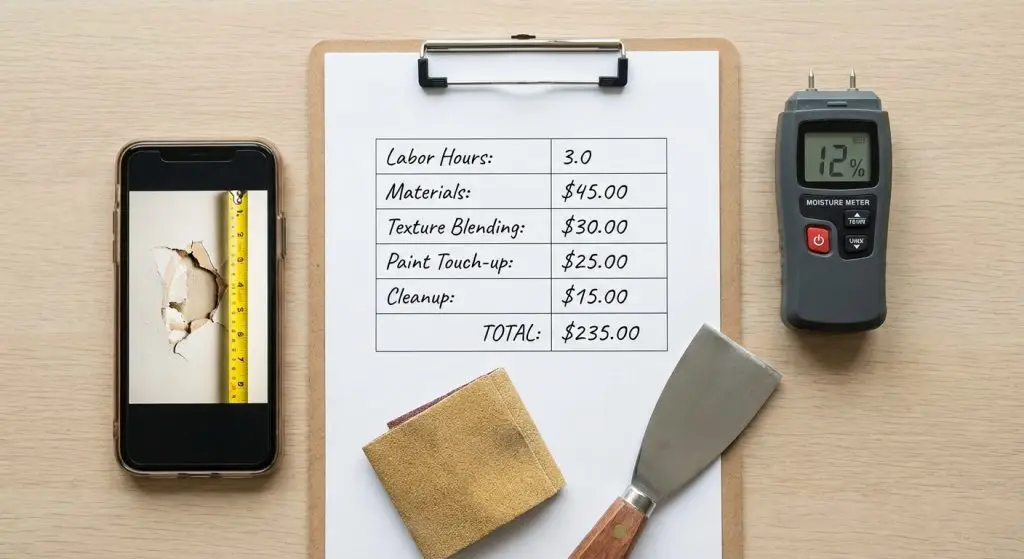
Use a smartphone for well-lit, straight-on shots, and include a reference item (like a tape measure or ruler) for context. This allows the estimator to determine damage area and prep needs, often within hours.
Photo-to-Estimate Pro-Tip:
Send high-resolution images from several angles and include measurements in your message. Natural daylight or room lights help reveal surface details. Take a wide shot for context, then close-ups for edges and texture. The more info you provide up front, the more precise and fast your quote will be.
On-site verification and moisture testing
Before finalizing price, a technician will perform a site visit to check:
- Actual damage scope (sometimes worse than photos show)
- Hidden moisture or mold using testing meters
- If special access (attics, vaulted ceilings) is needed
- Framing, electrical, or insulation risks
This inspection protects you by finding potential issues. It also makes sure your estimate is fair and accurate, with no surprises when the work starts.
Line items: labor, materials, and finishing
A clear quote details:
- Estimated labor hours (often 1–4 hours per repair)
- Material costs: drywall, joint compound, screws, tape, texture, primer, paint
- Number of finishing coats (typically 3: tape, fill, finish)
- Paint touch-up/blending zones, if included
Sample breakdown (for a 4″ hole):
- Labor: 2 hours x $90/hr = $180
- Materials (mud, patch, paint): $45
- Texture blending: $65
- Paint touch-up: $50
- Cleanup/disposal: $25
- Total: $365
This detail helps you compare quotes and question unusual line items.
Minimum service fee and mobilization
Drywall repair companies set a minimum fee, usually $350–$650, to cover travel, setup, and supply costs for small jobs. This fee covers the technician’s time, travel, and site prep even if the repair takes only an hour.
Ways to minimize per-hole cost:
- Bundle multiple repairs in one visit
- Group with neighbors for a volume discount
- Schedule during off-peak hours (ask about specials)
Small repairs by themselves almost always face this minimum, so plan accordingly.
Scheduling variables: rush, after-hours, and seasonality
Expect extra charges for:
- Same-day or next-day urgent repairs
- Weekend, evening, or holiday appointments
- Peak season demand (winter/spring: water/freeze damage spikes)
Drywall companies may prioritize existing clients or bigger jobs during peak times. Flexibility on scheduling could save you 10–20%.
Warranty and satisfaction guarantee
Reliable drywall repair companies include a workmanship warranty (often 1–3 years) covering cracking, tape separation, and finish failures caused by poor application. Read warranty terms:
- Covers labor and materials for visible repairs
- Excludes new water leaks or unrelated structural problems
- Satisfaction guarantees may cover touch-ups if the finish doesn’t match your expectations
A good warranty is worth a modest price premium. It saves you hassle and repeat expenses if flaws show up later.
Real-world pricing by repair scenario
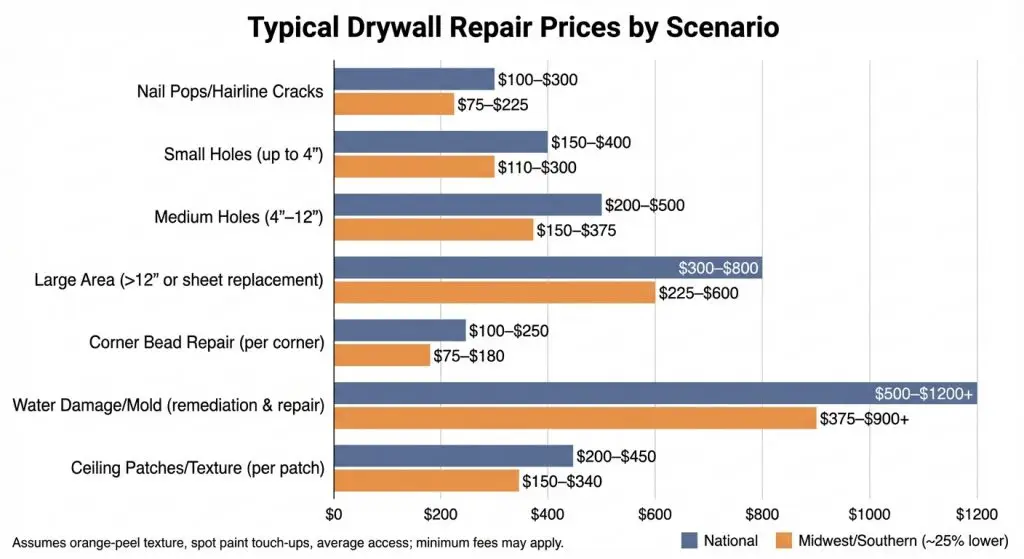
Here are cost drivers mapped to actual repair scenarios using national averages, Midwest/southern region pricing (~25% lower), standard orange-peel texture, and spot paint touch-ups.
| Scenario | Typical Price (National) | Midwest/Southern | Inclusions |
|---|---|---|---|
| Nail pops/hairline cracks | $100–$300 (min. fee) | $80–$200 | Up to 6 patches, sand, and spot paint |
| Small holes (≤2″) | $120–$450 per hole | $90–$330 | Patch, tape, mud, sand, touch-up |
| Medium holes (3–6″) | $200–$650 per spot | $150–$480 | May need backer, 3-coat, match texture |
| Large area (1–4 sq. ft.) | $350–$1,000+ | $270–$750+ | Cut-out, backer, tape, mud, return visit |
| Corners/C-bead repair | $250–$700 (per corner) | $190–$520 | Metal/vinyl bead + premium texture blend |
| Water damage, mold | $500–$2,500+ | $400–$1,850 | Demo, clean, treatment, new panels/texture |
| Ceiling patches/texture | $350–$1,500+ | $270–$1,150 | Overhead, premium blend, clean/paint |
Assumptions: All prices reflect company minimums, professional-grade materials, and average access. Extensive mold, high ceilings, or full-wall/room repainting may raise costs above these numbers.
Hairline cracks and nail pops
These minor defects are quick fixes. Pros often service several at once under the minimum fee. Expect bundled pricing:
- $100–$300 (mainly labor and touch-up)
- 1–2 hours on site, cleanup included
- Ideal for pre-sale touchups or light single-room repairs
Small holes (up to 2 inches)
Small accidental punctures or anchor holes fall here. Most companies charge $120–$450 per hole (and lower per-hole rates for multiples in one visit). Quick turnaround (1–2 hours). Includes single-patch, light sanding, and spot paint if paint is on hand.
Medium openings (3–6 inches)
Larger damage may need a backer board or special patch. Each spot takes longer, typically 2–3 hours with multiple coats and blending. Expect $200–$650, with bigger jobs priced per square foot. Blending texture is also more involved.
Large cut-out and replace (1–4 sq ft)
When damage covers a wider area (water intrusion or large knock-throughs), expect:
- Cut-out, new drywall set on backer
- Taping and 3 coats of joint compound
- Drying/return visit for sanding and finish
- Full touch-up/paint blending
- $350–$1,000+ based on coverage and return trip
Corner bead and outside corners
Hard-hit corners need metal or vinyl bead replacement and expert finishing for clean lines:
- $250–$700 per corner (higher for complex textures)
- Precise feathering and texture match is required
- Matching bullnose or specialty beads may add to cost
Water damage and mold considerations
Cosmetic water stains are straightforward. Active leaks or mold contamination require remediation:
- $500–$2,500+, driven by containment, moldicide, multiple panels
- Emergency jobs command a premium
- Insurance may cover some costs—criteria apply
Ceiling patches and texture blends
Ceiling repairs are more labor-intensive:
- $350–$1,500+ (average)
- includes ladder setup, dust containment, higher texture match standard
- Blending to nearest break (wall/trim/corner) to avoid visible seams
Per-hole vs per-square-foot vs time-and-materials pricing
Drywall repair companies use a few pricing models, depending on job size, complexity, and unknowns. Minimum and trip fees often override low unit rates for small or remote jobs.
When per-hole pricing makes sense
Simple jobs (nail pops, anchor holes, small punctures) are best quoted per hole. Clean, repeatable, easy to compare. Pricing rarely goes below the company minimum, so grouping multiple defects keeps the per-item price down and maximizes field efficiency.
When square-foot or panel pricing applies
Large cut-outs, full board replacement, or multi-area repairs usually use per-square-foot billing, generally $1.50–$3.50 national average, sometimes lower in value regions. This covers more material, longer labor time, and several finishing trips.
Panel pricing is used for replacing entire sheets (like after flooding or fire damage). Full-room patches or wall replacements always trigger this approach.
When pros use time-and-materials
For jobs with uncertain size or hidden damage (e.g., uncovering moisture in framing once drywall is open), a time-and-materials (T&M) model protects both you and the contractor.
- Hourly rates usually run $60–$100 for specialist techs; handypeople may charge less
- Materials and incidentals added as used, with hourly labor tracked by site visit notes
- Bills rise with complexity, not just damage area
T&M is essential when scope could grow due to unexpected problems.
How minimums and trip fees affect the final bill
Most reputable companies charge a minimum service fee ($350–$650) to cover prep, travel, and business overhead—important for profitability on small jobs. Fuel surcharges or travel zones can apply beyond major cities. These charges matter most for single-spot repairs. Asking about minimums up front leads to fewer billing surprises.
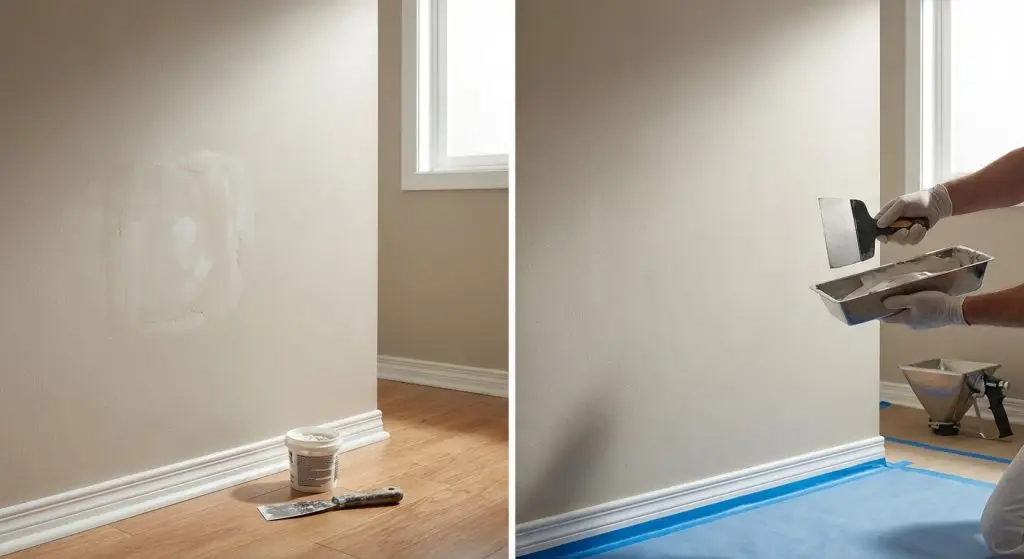
Handyman vs drywall repair company: cost, quality, and risk
Choosing between a local handyman and a specialized drywall repair company involves more than hourly rates. Consider the real pros, cons, and the longer-term value.
Rates and total job cost comparison
- Handyman: $30–$75/hour (may need multiple visits or lack finishing skills)
- Drywall repair company: $60–$100/hour (usually finishes faster, lower risk of follow-up repairs)
While handypeople may charge less per hour, drywall pros are more efficient and predictable, usually finishing jobs in one or two visits.
Finish quality, texture match, and paint integration
The main reason to hire a drywall repair company is to get seamless, invisible repairs. Pros invest in color/texture matching and high-quality painting gear. They own the specialized tools for knockdown, orange peel, or custom trowel finishes, plus the skill to blend patches until you can’t find the repair once dry. Paint blending and feathering stop “flashing,” which is common with amateur fixes.
Hidden costs: dust, delays, and rework
Low-cost handyman fixes may look like a bargain but may cut corners on prep and cleanliness. Unfinished edges, visible seams, or mismatched paint can lead to repeat calls and new costs. Uncontrolled sanding dust can trigger HVAC or cleaning bills, wiping out any initial savings.
Insurance and drywall repair cost
Wondering if insurance can help with your drywall repair? Coverage can offset major expenses, but only for qualified losses, not maintenance or “wear and tear.”
Covered perils vs maintenance issues
Insurance usually pays for drywall repairs when the damage is:
- Sudden (burst pipe, storm, accidental impact)
- A covered peril under your policy
Routine drywall cracks, nail pops, old leaks, or chronic settling are usually classed as maintenance and excluded from claims.
How pros write estimates for insurance
Repair companies familiar with insurance work will:
- Provide a formal, line-item estimate with photos
- Use adjuster-recognized codes or standards
- Highlight mold/moisture testing if present
- Supply before-and-after documentation
A compliant estimate speeds claim processing and boosts chances of approval.
Deductibles, depreciation, and out-of-pocket
Remember, most policies have a deductible ($500–$2,500+) that you pay before coverage kicks in. Insurers calculate depreciation on older drywall, so reimbursement may be less than full repair cost unless you have replacement cost coverage. Always clarify projected out-of-pocket costs with your contractor and adjuster before work starts.
How to get the most accurate estimate before a site visit
Want a fast, accurate quote? Help your drywall repair company help you by sending:
- Clear photos showing the whole room and a close-up of damage
- Dimensions of all holes/cracks (width, height, and depth)
- Ceiling or wall height, plus any unusual access hazards (stairs, trim, tile)
- Details on existing wall texture and paint color (a small paint chip or color name helps)
Take time to label each issue and include your address or neighborhood for travel pricing clarity.
Photo-to-Estimate Pro-Tip:
Use natural daylight when you can and clean the damaged area so cracks and edges are easy to see. Tape a ruler or dollar bill beside the damage in photos for a sense of scale. The more organized your info, the faster your estimate will arrive.
Questions to ask before accepting a quote
Before agreeing to a drywall repair contract, ask:
- What is included (labor, materials, texture, and paint)?
- Is the minimum service or trip charge applied to my job?
- Are paint touch-ups and blending covered, or is full-wall painting extra?
- How will dust and debris be contained?
- Is moisture or mold testing standard for my repair type?
- What is the warranty period, and what does it cover?
- Are multiple visits included if extra drying or sanding is needed?
- How will unforeseen damage or changes affect the price?
Use these questions to avoid hidden costs and ensure your satisfaction.
Conclusion: pay for invisible repairs, not repeat visits
When it comes to drywall repair, paying for expertise up front leads to a flawless finish, guaranteed texture match, and lasting value. Don’t chase the lowest quote. Invest in a drywall repair company that details the scope, stands behind its work, and ensures you never see evidence of the repair again. Letting professionals handle patching and blending protects against messy mistakes and future callbacks.
For the most accurate estimate and high-quality repair, trust the specialists at Precision Patch Pros. Get started with a transparent, no-obligation quote. Your walls will thank you.
Frequently Asked Questions
Q: How much should drywall repair cost per square foot?
A: Expect $1.50–$3.50 per square foot, though company minimums ($350–$650 per visit) may override per-foot pricing for small jobs.
Q: What’s the minimum charge for a drywall repair company?
A: Most pros have a standard minimum service fee, typically $350 to $650, to cover travel, setup, materials, and basic repairs.
Q: Is drywall repair cheaper than drywall replacement?
A: Yes. Patch repairs are almost always less expensive than full replacement, unless damage is widespread or there’s structural/mold risk.
Q: Does homeowners insurance cover drywall repair?
A: Insurance may cover drywall repairs from sudden damage, like a burst pipe, but wear-and-tear or gradual settling are excluded.
Q: Why do ceiling repairs cost more than wall repairs?
A: Ceilings require ladders or scaffolding, careful prep, and more skill to blend texture overhead, which raises labor charges.
Q: Do drywall repair companies charge by the hour or by the job?
A: Both models exist. Simple or predictable repairs are often quoted per job or per square foot, while complex or open-ended repairs may use hourly rates.
Q: What’s included in drywall repair labor costs?
A: Labor covers demolition, patching, taping, texture blending, painting, cleanup, and warranty coverage—more than just filling a hole.
Q: How do I ensure a paint match on drywall repairs?
A: Provide leftover paint or accurate color information. Pros blend edges, but full-wall repainting may be needed for perfect, flash-free results.