
A doorknob that swings through drywall leaves a round, crumbling hole about the size of a fist. A punched hollow-core door leaves something worse: torn skin with nothing solid behind it. Both are fixable. Both have a point where repair stops making sense. This guide covers who to call in Hesperia and the wider Victor Valley, what the work should cost, how long it really takes, and what a landlord or inspector will actually accept.
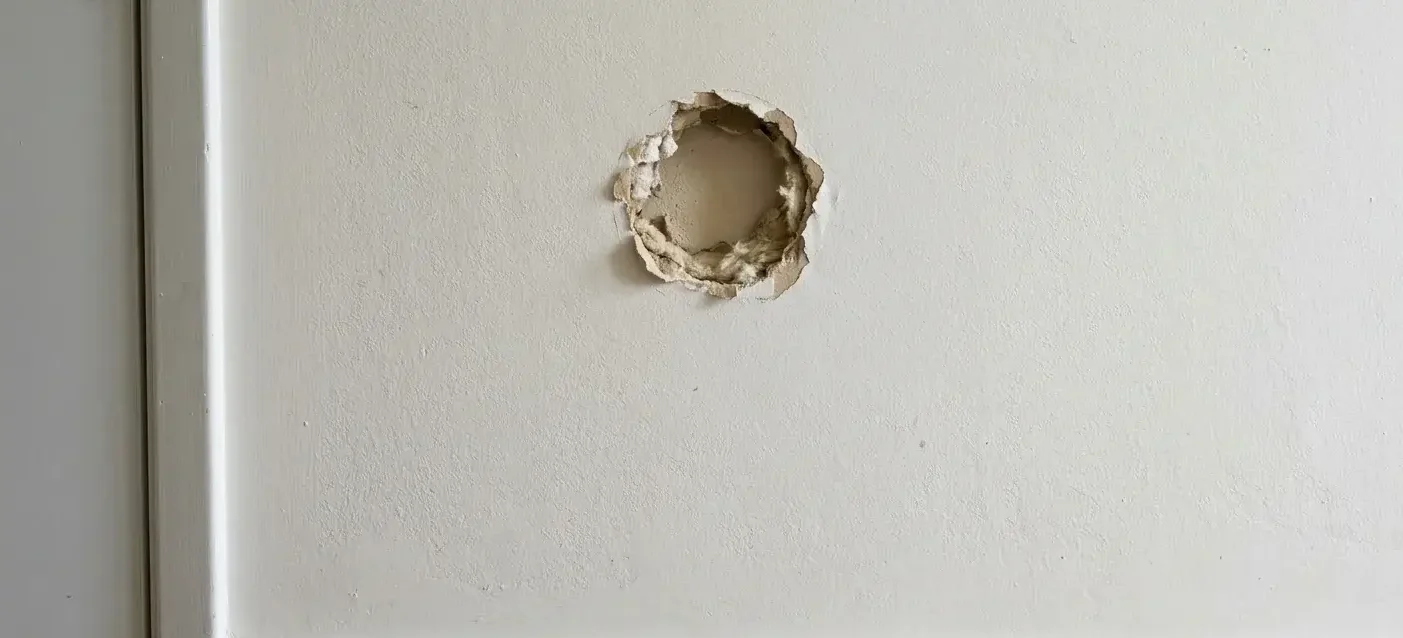
How do I find the right local help for doorknob and punch hole repair?
For a hole in the wall behind the door, call a drywall repair specialist. For damage to the door slab or a loose lockset, the right trade changes. Four different kinds of pros show up for this search. Picking wrong costs you a second appointment.
| Who you call | Best for | What they don’t handle |
|---|---|---|
| Drywall repair specialist | Knob holes and punch holes in walls and ceilings, texture matching (orange peel, knockdown, smooth, popcorn), paint touch-up | New construction drywall hanging or full-room installs, mold remediation, water extraction |
| Locksmith | Knob and lock hardware: keypad, electronic, mortise and deadbolt knob locks, rekeying, latch alignment | Patching the door skin or the wall behind it |
| Door company or finish carpenter | Slab replacement, jamb and frame repair or replacement, hinge and strike resets | Texture matching and paint blending on the wall |
| General handyman | Mixed small jobs in one trip | Consistent texture matching, which is where most handyman patches show through later |
Quick way to sort it:
- Damage is in the wall only: drywall specialist, one visit.
- Knob spins, sticks or won’t latch, door is intact: locksmith or hardware reset.
- Door skin is torn open and the bore is blown out: door company for the slab, drywall pro for the wall.
- Both wall and door: book the wall repair first, because paint blending is the part people notice.
Precision Patch Pros works as a specialist rather than a general handyman, covering the High Desert and Victor Valley along with Kern County and the north Los Angeles valleys.
Can a punched hole in a hollow wood door in Hesperia be repaired so it’s not visible, or do I need a new door?
A punched hollow-core door can be repaired to look right from a few feet away. It rarely becomes truly invisible without a full refinish. A knob dent, a cracked veneer, or a hole under about three inches fills and sands well. A caved-in panel with the skin pushed inward and splintered usually wins the argument for replacement. There’s no core behind the skin to build against.
Solid-core and solid-wood doors are different. Those carry enough material for an epoxy or wood-filler repair that holds up to daily use, including the latch edge.
Pro tip: if the door skin is cracked but the latch still works, ask whether patching and a hardware reset can be bundled into one visit. That one question often saves a separate service call. The flip side is easy to spot too. If you can push the damaged area and feel it flex, or if the bore hole for the knob has broken through to the edge, patching won’t hold.
How much does it cost in Hesperia to fix a doorknob-sized hole in a bedroom door, and is it cheaper than replacing the slab?
Wall repair and door repair price differently. That’s the number most articles skip. Small drywall knob holes commonly land in the $60 to $200 range depending on size and texture. Larger door slab repairs on solid-core doors run closer to $250 to $550 once filling, sanding and refinishing are counted. A plain hollow-core interior slab often sells in the lower national home-center price range, so once a door repair passes about three hours of labor, replacement is the cheaper path.
At Precision Patch Pros, labor by hole size runs $100 to $150 for a small hole, $150 to $250 for a medium hole, and $300 to $450 for a large hole or section, with ceiling work adding 20 to 30 percent.
| Scenario | Typical path | What drives the price |
|---|---|---|
| Knob dent in drywall, under 2 inches | Compound, sand, texture, touch-up paint | Texture type, paint match |
| 3 to 5 inch drywall punch hole | Cut square, add backing, tape, float, texture | Hole size, number of coats |
| Hollow-core door, small hole | Fill and refinish | Whether the whole door gets repainted |
| Hollow-core door, caved panel | Replace slab | Slab cost plus hanging and painting |
Materials are the small line. A patch kit, compound, tape and texture spray usually total under $40. Labor and finish work carry the rest. The repair is judged on how the paint looks, not how the mud went on. Financing is available through Precision Patch Pros with payments from $18 a month or zero interest for 21 months, no prepayment penalty and no home equity required.
If you want a number for your own wall before you plan anything else, send a few photos of the damage here.
How long does a proper doorknob/punch hole repair actually take door-to-door, including compound dry time and sanding, and can it be done in a single afternoon before a move-out?
Yes, a single afternoon is realistic. Only if you use setting-type compound. The product choice decides the schedule. A compound labeled 45 minute hardens fairly quickly, while lightweight premixed compound can take a full day to dry between coats.
| Step | Setting mud (same day) | Premix (overnight) |
|---|---|---|
| Cut, backer, patch | 20 to 30 min | 20 to 30 min |
| First coat | 45 min set | 8 to 24 hr dry |
| Second and third coats | 45 min each | overnight each |
| Sanding | 10 to 15 min | 10 to 15 min |
| Texture and paint | 30 to 60 min plus dry time | same |
Best case for a pro with setting mud on one hole: three to four hours, paint included. First-timer with premix and three coats: two to three days. That gap is why move-out repairs get booked instead of attempted. One customer review shown on the Precision Patch Pros site notes the crew was able to make an appointment for the following day. The company says most jobs finish in one visit including patch, texture match and paint touch-up.
Can a landlord or homeowner get away with a quick cosmetic patch, or will it fail move-out standards?
A cosmetic patch passes when it’s flat, textured to match, and painted. It gets billed back when it’s visible under side lighting, which is exactly how walkthroughs are conducted. Property managers rarely carry a ruler. They stand at the door, look down the wall, and flag anything that catches shadow.
Here’s the practical split. A knob hole filled, sanded flat and spot-painted with the same sheen usually passes without comment. The same hole filled with a mound of spackle, no texture, and painted with a brush in a slightly different white gets written up. The tenant is charged for the repair plus the manager’s markup. The result is a bill larger than hiring the work out in the first place. California landlords must provide an itemized statement of deposit deductions within 21 days of move-out, so you’ll see exactly what they charged. The California Courts Self-Help Guide states that deadline in California Courts Self-Help Guide.
Two things get charged back almost every time: a patch that shows through paint, and a hollow-core door with a hole covered by a stick-on plate.
How do I know if the wall needs paint blending after patching?
Test the wall before you decide. If the existing paint is more than about three years old, or the finish has any sheen above flat, a spot touch-up will flash under light even with the exact color code. Flat paint on a recently painted wall usually takes a spot touch-up fine. Anything else gets blended out to the nearest corner or trim line. Paint stops cleanly at a break, not in the middle of a wall.
What materials are used to fix a doorknob hole in drywall?
Match the method to the hole, not to what’s on the shelf:
- Shallow dent, no break through the paper: lightweight compound only, two thin coats.
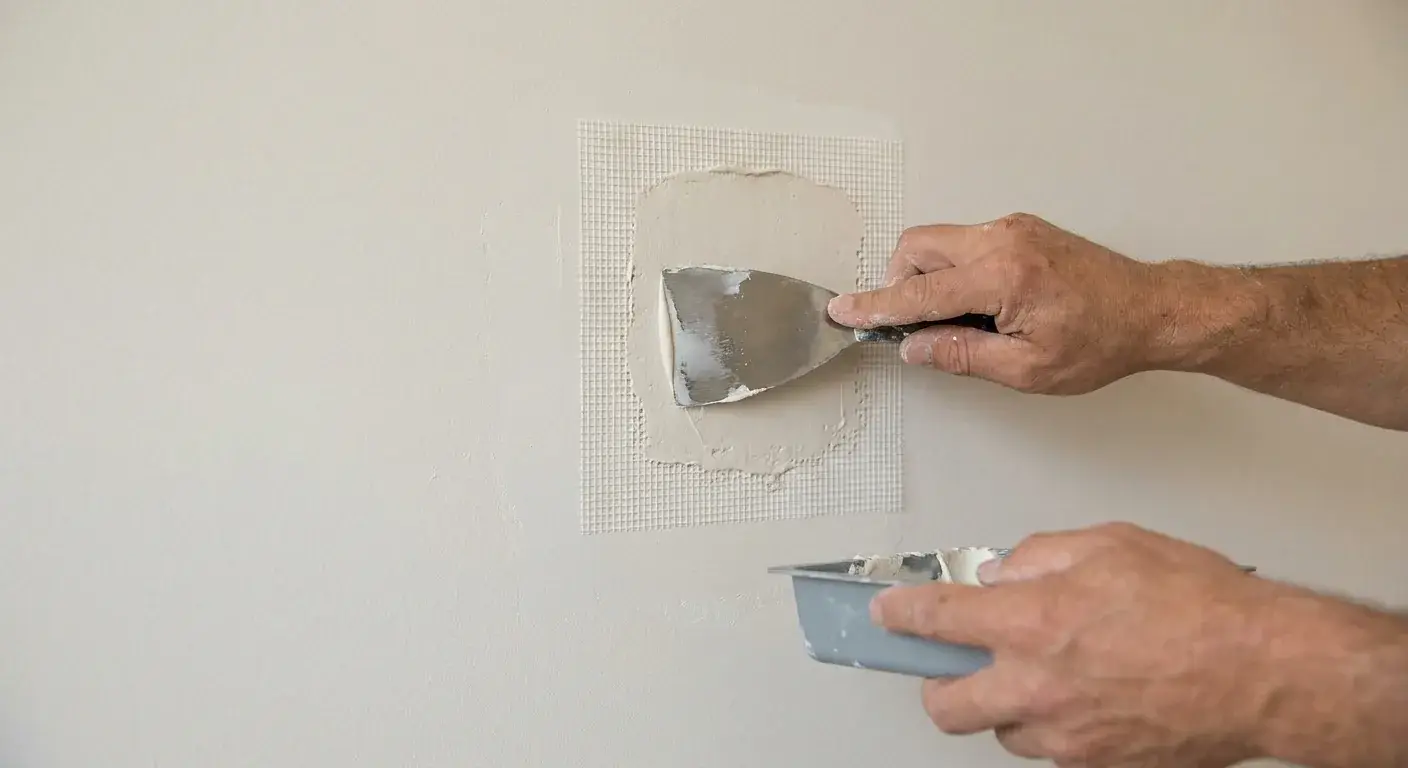
- Clean hole 2 to 4 inches: self-adhesive mesh or metal patch kit, compound, texture.
- Larger hole or spider cracking around it: cut a square, add wood backing behind the opening, screw in a drywall plug, tape the seams, then float and feather wide.
Skipping the backing on a large hole is the number one reason patches sink or crack a year later. Finish work adds primer, texture to match orange peel or knockdown, and paint.
What should I do if the punch hole is near wiring, plumbing, or a sticky door frame?
Stop and look before anything goes in the hole. Shine a light inside and check for cable, pipe or duct within a few inches. Knob holes sit around 36 inches off the floor, which is outlet and switch height. That’s where trouble hides.
What tends to work:
- Hole within a foot of an outlet or switch, or you see nicked cable: call a licensed electrician first. Do not patch over exposed conductors.
- Wall feels damp, smells musty, or the drywall is soft at the edges: call a plumber to find the source before repair. Drywall pros patch after the leak is fixed, not during.
- Door sticks, drags or no longer latches: that’s frame or hinge work, so call a door company or finish carpenter. A patched wall won’t correct a racked jamb. A jamb that keeps moving will crack the patch again.
If the hole is clean, dry and clear of utilities, it’s a straightforward repair.
How do I prevent future doorknob holes in rentals and busy homes?
The cheapest fix is a stop. Which one you choose depends on whether you own the place or rent it out.
- Hinge-pin stops, a few dollars per door: best for rentals. No holes in the wall, nothing for a tenant to remove and lose. Failure mode is bending on heavy doors, so use the ones with a rubber bumper on both arms.
- Baseboard or floor-mounted stops: best for owner-occupied homes with solid floors. They hold the longest, but they screw into the floor or base and become a trip point in tight hallways.
- Adhesive wall guards, clear plastic discs: cheapest option and the weakest. They peel in heat. They only protect the paint, not the drywall behind it.
- Hollow-wall anchored wall-mount stops: solid when installed with a real anchor. Installed into bare drywall, the anchor pulls out and leaves a bigger hole than the knob made.
- Soft-close or magnetic catches on closet and bathroom doors: worth it where doors get slammed daily.
For a rental turn, hinge stops on every bedroom and bathroom door cost less than one patch and one paint touch-up.
Precision Patch Pros is licensed and insured under CSLB License #830875 and has served the region since 2020, with 63 five-star Google reviews as of September 2026 and a 5-year guarantee on the work. Text 2 to 3 pictures with your ZIP code and get your quote in 10 minutes.
Frequently Asked Questions
My door handle hole is too big. What can I do to fix it?
An oversized or mis-bored knob hole has three repair paths: a metal door-saver plate that covers the bore and spreads the load, wood plugs set in epoxy and re-drilled, or a rebuilt latch edge with a glued hardwood block. Standard interior doors are bored to common knob and latch dimensions, so any plug work has to return to those sizes. If the bore has broken through to the door edge, replace the slab.
How do I repair my door knob?
Most loose knobs are two screws away from fixed. Pull the rose or trim ring, tighten the through-bolts evenly, and check that the latch retracts fully. If the knob turns without moving the latch, the spindle or the latch assembly has failed. A locksmith handles that faster than replacing the whole set.
What is the tiny hole on a door knob for?
That pinhole is the emergency release on privacy locks for bathrooms and bedrooms. A straight wire or the small key that came with the set pops the lock in seconds. Knowing it exists is the difference between opening a jammed bathroom door and kicking it open, which is how a lot of punched doors start.
Is it cheaper to repair the drywall hole or replace the door hardware first?
Fix the hardware first if the knob is what caused the damage. A replacement passage knob with a working latch stops the door from swinging free. It costs less than the patch. Patching a wall while a broken knob still lets the door slam is paying twice.
Can orange peel texture be matched after a drywall patch?
Yes. Orange peel is sprayed on with a hopper or aerosol texture can, then knocked down or left alone depending on the original profile. The match depends on nozzle setting and spray distance, so a test panel on cardboard before touching the wall is standard practice. Knockdown and popcorn are matched the same way, with a different pass.
Can one handyman fix both a broken doorknob and the drywall hole in the same visit?
Often yes for the hardware swap, since that’s a screwdriver job. The wall is the harder half. Texture matching and paint blending are where most single-visit attempts fall apart. Ask specifically whether texture and touch-up paint are included before booking.
Do Hesperia handymen charge a minimum service fee?
Most do. Expect a minimum call-out or trip charge in the $150 to $250 range from many local pros, which is why a single small hole can cost as much as three holes done together. Bundle every patch in the house into one appointment, including closet dings and anchor holes.
What does wood door screw hole repair involve?
Stripped hinge or strike screw holes get drilled slightly oversize, filled with glued hardwood dowels or golf tees, trimmed flush, then re-drilled for a pilot hole. Longer 3 inch screws into the framing behind the jamb solve sagging hinges permanently. Wood filler alone strips out again within months.
Can this repair be done the same day in Hesperia?
For drywall knob holes, same day is normal with setting-type compound. Precision Patch Pros says most jobs finish in one visit. Door slab replacement usually needs a second trip, since the new slab has to be bored, hung and painted. Send photos early in the day if you’re working against a move-out deadline.